Tuesday, September 30, 2014

How to Feed a House Rabbit

Your house rabbit needs to have a good diet to stay healthy and live a long life. A well-balanced diet will consist of a good mix of hay, greens, food pellets, and the occasional healthy treat.


1. Give your rabbit plenty of hay. Hay is the most important part of your rabbit's diet, since it provides lots of fiber to aid digestion. A grass hay such as Timothy should be available at all times, allowing the rabbit to eat as much as he or she wants. You can add a variety of hays to encourage more hay consumption. Blue, Brome, Rye, Fescue, Orchard, and Timothy hay can make an tasty blend. Alfalfa can also be offered as an occasional treat to adult rabbits, and should be the primary hay given to babies.

2. Give leafy greens frequently. Look for greens that are dark in color, like dandelion, chicory, parsley, romaine lettuce and cilantro. Always buy organic lettuce. Wash the greens thoroughly before giving them to the rabbit. Depending on your rabbit's needs, sometimes you should only give greens once a week, but most rabbits like lettuce or other greens as one of their two meals every day. The other meal should be pellets (don't forget that hay should always be accessible).

3. Supplement your rabbit's diet with a good quality pellet. Contrary to popular belief, pellets are in fact the least important part of a healthy rabbit diet. Note: Even when you are planning on changing your bunny to a healthier pellet, do so gradually, mixing in more of the new with the old over a months time. This will prevent serious digestive upsets. Feed your adult rabbits a small amount of pellets daily, about 1/4 cup for every five pounds of body weight. Babies that are weaned should have unlimited alfalfa based pellets because alfalfa has extra calories.

4. Keep your rabbit supplied with fresh water. Like all animals, rabbits need fresh water. You can use a heavy bowl or a water bottle. Some rabbits prefer one over the other. A water bottle may need to be changed less frequently than a bowl, which can easily collect rabbit hair and other pollutants. Either will need to be changed and cleaned regularly. A stuck nozzle or broken water bottle can easily go unnoticed. Make sure to do a quick daily check of your water bottle. A simple push of your finger on the nozzle will help ensure it is working properly.

5. Feed your rabbit small amounts of healthy treats, occasionally. Small slices of carrot, banana, apple or a few cheerios make good treats. A couple of raisins is another fun snack. Treats should make up only a tiny portion of your rabbit's diet. For bunnies with extra sensitive digestive systems, use mint, basil and rosemary as a healthy sugarless treat. Other good treats are small amounts of carrot, (unlike Bugs Bunny, a real rabbit can get very sick from eating a lot of carrot) dried banana chips, fresh banana, apple, blueberries, strawberries, wild strawberries, (best from your own backyard) and wild cherry tree branches (not the kind of tree that actually grows cherries). Again, please do not feed your rabbit treats too much otherwise it could make your rabbit sick! All the listed treats should be selectively given except for wild cherry tree branches as they are good for rabbit's teeth to chew on (giving them cardboard toilet paper rolls after they have been used is also a good idea if they don't have much glue on them and is also a good way to recycle).

Friday, September 5, 2014

Storing Vegetables for Winter

Vegetable gardens may close down for the winter in cold climates, but that doesn't mean we can't still enjoy the vegetables we grew. Many vegetables will keep for months in cold storage, if you can provide the right conditions. Choose your vegetables well, keep an eye on them through out the winter and don't be shy about using them. They won't last forever.


1. Store only fully mature vegetables. Immature fruits and vegetables will rot quickly. Hold off harvesting as long as possible, especially with root vegetables, that can withstand some frost.

2. Do not store vegetables that have been bruised or nicked or that show the slightest sign of rot. Be careful when handling them.

3. Remove all excess soil. Don't wash the vegetables, just let them dry and brush off the soil. You can wash them well before using them.

4. Thoroughly clean your storage area before each use.

5. Keep the storage area dark.

6. Do not expose stored vegetables to temperatures below freezing.

7. Check on your stored vegetables every week or two. Storage times are just approximations, since vegetables, temperatures and conditions can vary widely.

8. Use vegetables taken from cold storage as soon as possible. They will not last as long as they would if they had been freshly picked.

Thursday, July 10, 2014

The health benefits of turkey

Meat is a valuable source of protein and other nutrients. But when it comes to a healthy diet, it's important to choose the right kind of meat and eat the correct portion size. The Australian Guide To Healthy Eating recommends we eat one serving of meat per day, the equivalent of 65 to 100 grams of cooked meat.

The pros
Turkey is a rich source of protein.
Skinless turkey is low in fat. White meat is lower in kilojoules and has less fat than the dark meat. A typical turkey consists of 70 per cent white meat and 30 per cent dark meat.
Turkey meat is a source of iron, zinc, potassium and phosphorus.
It is also a source of vitamin B6 and niacin, which are both essential for the body's energy production.
Regular turkey consumption can help lower cholesterol levels. The meat is low-GI and can help keep insulin levels stable.
Turkey contains the amino acid tryptophan, which produces serotonin and plays an important role in strengthening the immune system.
It is also a source of selenium, which is essential for thyroid hormone metabolism. It also boosts immunity and acts as an antioxidant.


The cons
Turkey can be high in sodium.
Some meat, particularly prepackaged slices, can be processed and contain other substances.Turkey skin is high in fat.
Research suggests large amounts of tryptophan can make you sleepy.

Monday, July 7, 2014

Raising Chickens and Its Benefits


It looks like everyone is enticed to raise their own chickens at home. I wouldn’t wonder why they are tempted in doing so. Raising your own chickens offers a lot of benefits. You can have your own chicken meat and eggs. These might be the obvious benefits, but they do not end there. Raising chickens can give you more on what you don’t expect. In this article, we will find out the other benefits of raising chickens in your own home.

Healthier and tastier load of eggs

You may not know this but raising your own chickens in your backyard can give you a healthier load of eggs. Chickens grown in factory farms don’t have the privilege to explore nature, do a little chicken exercise and peck bugs. When these factory farmed chickens lay eggs, the eggs are less nutritious since the hens are deprived of doing natural chickenish things.
Factory farms of chickens are mostly concerned of producing more eggs than focusing on the egg’s quality.

In fact, backyard chicken eggs have a greater percentage of Vitamin E, Vitamin A, beta carotene and omega-3 fatty acids. If the eggs are from your backyard, they are undoubtedly tastier than eggs that you bought in grocery stores. Backyard chicken eggs have firmer whites and brighter yolks.

Fresh supply of chicken meat

Just like the eggs, chickens grown in your own backyard will yield a fresher supply of chicken meat. Since your chickens have the freedom of exploring your backyard, they develop leaner muscles which are actually good during your cooking sessions. Aside from that, whenever you run out of chicken meat, you can always depend on your backyard chickens. Feel free to have a fresh supply of chicken meat whenever you like.

Better compost pit

Chicken droppings are nice things to add in your compost pit. Their droppings are actually rich in nitrogen. Nitrogen for plants is as important as oxygen for humans. With nitrogen, plants can do a better job of cellular respiration; thus, having a better performance in the process of chlorophyll synthesis. Your plants and vegetables will have fuller and greener leaves. As you grow chickens, you can also grow better plants and vegetation. Wouldn’t that be great?

Natural insect control

Chickens love to peck on bugs and other insects. Bugs and insects are naturally the enemies of your vegetation. They nibble on leaves and chew on the root crops. With chickens around, they can help you

minimize the population of insect pests in your garden. Their constant pecking and scratching are a perfect way to save your garden from deteriorating because of insect pests. However, be sure to put a little fencing on your sensitive plants. The chickens might not be able to hold their continuous habit of scratching.

Stress reliever

Just like any other hobby, raising chickens is a way of relieving your stress. It kills your boredom when you have nothing to do at home. They are also fun and interesting to watch. Undoubtedly, raising chickens have a lot of benefits to offer.

Thursday, June 19, 2014

Selling Goat Milk Legally

Raising goats is part of a green, sustainable lifestyle, but if you want to sell your goat milk, you have to understand the laws. Although selling anything other than Grade "A" pasteurized milk is illegal in 46 states, farmers can still sell raw milk legally in 32 states. The states that have legalized the sale of milk that's not from a grade A dairy or pasteurized have done so by passing additional laws or administrative rules.


In 1924, the United States Public Health Service (USPHS) developed a model law called the Pasteurized Milk Ordinance (PMO) to stop milk-borne illness. The intent of the law was to require that only Grade "A" pasteurized milk could be sold to consumers and businesses. So far, all but four states have passed the law or a modified version of it.

Small milk producers have gone around the law by selling shares in their animals, and some state regulators have chosen not to intervene. The share plan, which has been adopted by some people with cows, is like the community supported agriculture (CSA) model, in which people invest in (buy a share of) a farm and get vegetables and fruits throughout the season — only in this case they get milk.

Even if you can't sell milk for human consumption, you may be able to sell it to people for their pigs, dogs, or orphaned animals. In every state but Michigan, goat owners can legally sell raw milk for animal consumption.

Legally selling milk products such as yogurt or cheese without being licensed as a dairy is another story. Most states prohibit sales of these items by small, unlicensed farmers, although in some states the authorities' policy is not to actively seek out people who are selling these products outside of the law.

Monday, June 2, 2014

Providing Shelter for Your Goats

To keep your goats safe, you need to provide them shelter. How elaborate your goat shelter is depends on where you live, what structures are available, how much you can afford, and how many goats you plan to have in the shelter. Some of the things to consider when deciding where your goats will live include:

Flooring: Dirt or gravel floors are best, although some people prefer wood. Dirt absorbs urine, and both gravel and dirt, when covered with straw, are warm. Avoid concrete because it's cold and hard on the goats' bodies, although it's easier to clean.


Bedding: Regardless of type of flooring, you need to use some sort of bedding for warmth and comfort. If you do have to use a concrete floor, make sure to put down 3 to 4 inches of wood shavings or straw to insulate the goats.

Dimensions: Consider the height and width of the shelter. Goats need to have 10 to 15 square feet of housing if they also have an outdoor area. When building, think about how easy it will be to muck out old bedding. Having to bend over or stretch a long way while mucking is uncomfortable and hard on your back, so if the goat shelter you build won't be taller than you are, don't make it too deep.

Climate: An open shelter may be fine in a mild, dry climate with good fencing from predators, but it won't work in an area of heavy snow and wind or the open range. Make sure that your building is in an area with good drainage and, if it is open, that it faces away from the prevailing wind.

Herd composition: If you have or plan to have a lot of goats, you need to make sure you have a large enough structure or plan to build more shelters over time. Groups such as bucks, does, and kids to be weaned need separate housing areas.

Storage: Remember that you need to have an accessible (to you, not the goats) place to store feed and goat-care tools.

Access to water: Having easy access to water, but it isn't critical in most cases. Just remember that if you don't have a water source close to your goats' area, you'll be hauling water every day for a long time.

Other considerations: Regardless of the breed, you need an area for doing routine care, such as hoof trimming or clipping. If you're raising dairy goats, you can use the same space for milking. In addition, if you're planning to breed your goats, you need kidding pens, which can be 4 feet by 5 feet; the number that you need depends on how many goats are kidding at one time. Plan on leaving your goats with their babies in kidding pens for two to three days, and make sure that you stagger their breeding so they have a place to go.

Monday, May 12, 2014

Miniature Dairy Goat Breeds

If you want to raise goats to promote a more sustainable lifestyle, but you have limited space or don't want to be drowning in goat milk, the miniature dairy breeds might be good choices for you.

Miniature breeds are relatively new to the scene but are growing in popularity. Miniature dairy goats include Nigerian Dwarves, Pygmies, and the most recent development in dairy goats in the United States: miniature, crossbred versions of the standard breeds, called minis. Check out these miniatures:

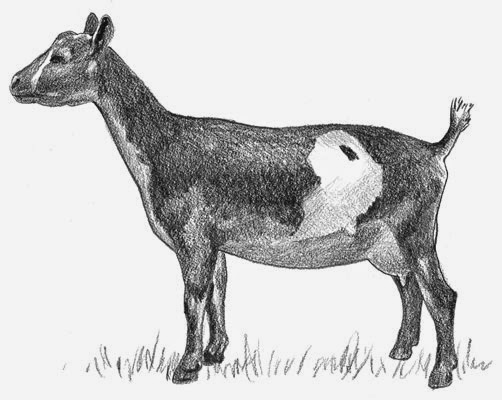
Nigerian Dwarf: Nigerian Dwarves came to the United States from Africa. They are not true dwarves because they are proportionate in size. They are colorful, friendly, easy to handle, and in some cases good milk producers.

The Nigerian Dwarf Goat Association allows 17 to 21 inches for does and 19 to 23 inches for bucks, while the American Goat Society allows a maximum of 22.5 inches for does and 23.5 inches for bucks. They average around 75 pounds.

Some urban goat farmers shy away from the Nigerians, despite their petite size, because they can be loud. But their kids are the cutest things around, and Nigerian Dwarves have a lot of them. The does tend to be easy kidders and natural mothers.

Some Nigerian Dwarves give only about a pound (one pint) of milk per day, but others produce as much as 8 pounds (a half-gallon). A lot of them are hard to milk because of their small teats, but others have been bred to alleviate this problem.

You can eat a Nigerian, but most people don't. It isn't cost effective, and besides, they're so darn cute!


Pygmy: Pygmy goats aren't usually considered dairy goats, but they can be milked. Most of them are raised as pets or 4-H projects, but a small minority of breeders raise them for milk. The Pygmies raised for milk tend to look more like Nigerians in body shape. If you want Pygmies for milk, make sure to ask whether they're registered with the American Goat Society and whether the breeder is milking them.


Pygmies have been bred to be short and stocky and are more limited in color, ranging from white to brown to black with only minor variations. Because they have been bred down to a short, compact size, Pygmies often have problems kidding and need the services of a veterinarian for cesareans. They are not quite as prolific as the Nigerians, either.

Kinder: The Kinder is a moderate-sized breed that was developed in Washington and first registered in 1988. It is a cross between the Pygmy and Nubian breeds. Kinders are good dual-purpose (milk and meat) goats that are ideal for family farms.

Minis: If you really like one of the standard breeds but are in the city or just don't have the space for big goats, minis are ideal. These goats are a cross between a Nigerian Dwarf buck and a doe of the breed you want to miniaturize.